
There is a story Robert Kiyosaki often tells about a trip to Malaysia that perfectly encapsulates the tension between talent and success.
He was there for a conference, sitting with a young journalist who was interviewing him. She was bright, articulate, and had just completed her master’s degree in writing and literature. During the interview, she noticed a note on Kiyosaki’s preparation papers: “Robert Kiyosaki, Best-Selling Author.”
At the end of the interview, she asked him for advice. She wanted to be a successful author like him. Kiyosaki paused and gave her a piece of advice that he knew might sting: “I suggest you take a sales training course.”
She was insulted. She had a master’s degree in the craft of writing. Why would she lower herself to learn sales? She felt he was belittling her education.
Kiyosaki smiled and pointed back to the note. “It says ‘Best-Selling Author,’ not ‘Best-Writing Author.’ You are a master writer. I am a terrible writer. But I am a master salesman.”
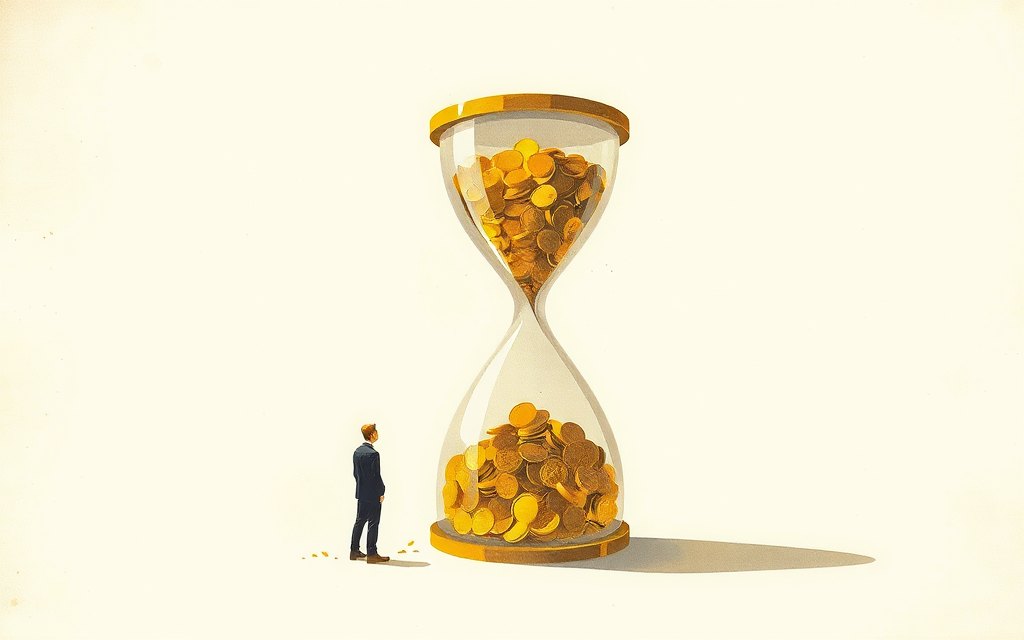
This uncomfortable moment highlights a reality that many professionals, creators, and business owners struggle to accept: being good at what you do is not the same as being successful at it.
Skill creates the product. Sales distributes it. Without the latter, the former is just a hobby.
Here is why understanding the mechanics of sales and marketing—and the difference between them—is the single most important investment you can make in your career.
The Critical Distinction: Marketing vs. Sales
One of the most dangerous conflations in business is treating marketing and sales as the same discipline. They are partners, yes, but they perform fundamentally different functions.
Imagine a brick-and-mortar store.
Marketing is everything that happens outside the store. Its job is to tell a story that makes someone stop, look, and walk through the door. It is the invitation. It deals with awareness, brand identity, and generating leads.
Sales is everything that happens inside the store. Once the customer is through the door, marketing’s job is done. Now, sales must convert that interest into a transaction. It deals with overcoming objections, understanding needs, and closing the deal.
The Breakdown
If you run an online business and you have high traffic but zero conversions, your marketing is working, but your sales process is broken. Your “storefront” (website experience) might be confusing, or your checkout process too long.
Conversely, if your product is incredible and your conversion rate is high, but nobody visits your site, your sales mechanism is fine, but your marketing is invisible.
The takeaway: Do not try to solve a sales problem with a marketing budget. Throwing more money at ads won’t fix a confusing customer journey.
Who Is Your Customer? (It’s Usually Not Who You Think)
A few years ago, marketing legend Seth Godin was invited to consult for a hospital in India. The hospital was failing. They had built a specialized maternity ward for childbirth, aiming to provide a superior experience for pregnant women.
They ran ads targeting pregnant women. They highlighted the care, the facilities, and the safety. And yet, the beds remained empty.
Godin asked them a simple question: “Who actually decides where the woman gives birth?”
The doctors assumed it was the pregnant woman. Godin dug deeper into the local culture. He discovered that in many traditional households in that region, the pregnant woman goes to her mother-in-law’s home for the later stages of pregnancy. The mother-in-law (the dharra) was the matriarch who made the decisions for the family’s health.
The hospital had been selling to the user (the pregnant woman), not the buyer (the mother-in-law).
They shifted their marketing strategy to target mothers-in-law, emphasizing the prestige and safety of having their grandchildren born at this specific hospital. The hospital filled up.
The Blind Spot
We often assume our customer is the person using the product. But in many sectors—B2B software, children’s toys, or healthcare—the user and the economic buyer are different people with different incentives.
If you don’t know who holds the wallet, you are just shouting into the void.
Empathy Over Pitching
There is a cliché in sales, popularized by the film The Wolf of Wall Street: “Sell me this pen.”
Most amateurs respond by describing the pen. “It has great ink,” “It feels nice,” “It’s a limited edition.” This is pitching features, and it rarely works.
True salesmanship is empathy. It is identifying a gap in the customer’s life and offering a bridge.
If you are in a meeting to sell a service, and you spend the first 20 minutes talking about your company, your awards, and your portfolio, you have likely already lost the room.
The smarter approach: Ask questions.
-
“What is the biggest bottleneck in your operations right now?”
-
“If you could fix one thing about your current provider, what would it be?”
Once they tell you their problem, you aren’t “selling” anymore. You are offering a solution to a pain they just admitted they have. You aren’t pushing a pen; you are offering them something to write with after finding out they need to sign a contract right now.
The Economics of Retention
Joe Girard holds the Guinness World Record for the most cars sold by a single salesperson. He didn’t do it by constantly chasing new leads. He did it by understanding the compound interest of relationships.
Girard estimated that 70% of his sales came from returning customers or referrals.
Most businesses are obsessed with acquisition. They burn cash on ads to get a customer to buy once, and then they ignore them. This is financially illiterate. The first sale is often the most expensive because you have to pay the customer acquisition cost (CAC).
The second, third, and fourth sales? Those are pure profit.
If you treat a customer as a one-time transaction, you are constantly restarting your business from zero every month. If you treat them as a lifetime relationship—checking in, offering value, solving problems post-purchase—you build a moat that competitors cannot cross.
🧠 Smart Money Talk Takeaway
Robert Kiyosaki’s advice to the young writer wasn’t about diminishing her art. It was about protecting it.
If you cannot sell, your ideas—no matter how brilliant—will die in obscurity. You don’t need to become a sleazy car salesman, but you do need to understand the psychology of value.
The move: Stop viewing “sales” as a dirty word. View it as the necessary bridge between your hard work and the people who need it. Whether you are an employee negotiating a raise or a founder launching a product, you are in sales. Learn the craft, or work for someone who has.