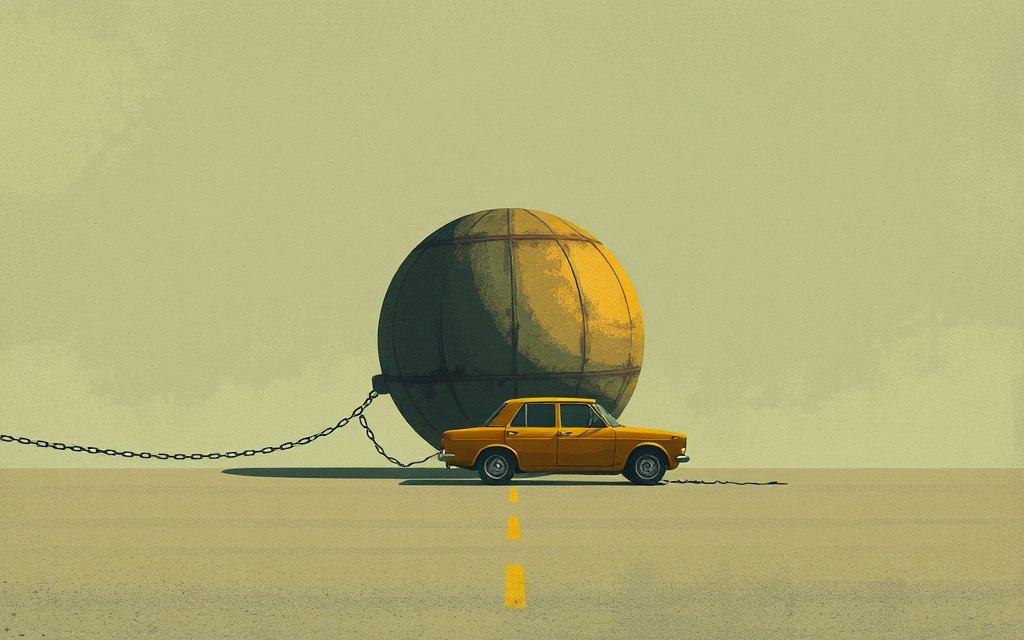
Credit card debt has a special talent: it lets you pay every single month and still feel like nothing is moving.
That feeling is accurate. With a typical card, most of a small payment goes to interest, and only a sliver touches what you actually owe. The good news is that the same maths works in your favour the moment you pay a bit more. This article shows the numbers, then the plan.
What the minimum payment really costs
Take a $5,000 balance on a card charging 22% a year, and no new spending.
| You pay each month | Time to clear it | Interest you pay |
|---|---|---|
| $125 | about 6 years | about $4,100 |
| $250 | about 2 years | about $1,300 |
| $400 | about 15 months | about $730 |
Doubling the payment from $125 to $250 doesn’t halve the time. It cuts it by two thirds and saves around $2,800.
That is the whole secret of card debt: every dollar above the interest goes straight at the balance, and the balance is what generates next month’s interest.
Put your own balance and rate into the Credit Card Payoff Calculator. Seeing your real date is more motivating than any advice.
Step 1: Stop the balance growing
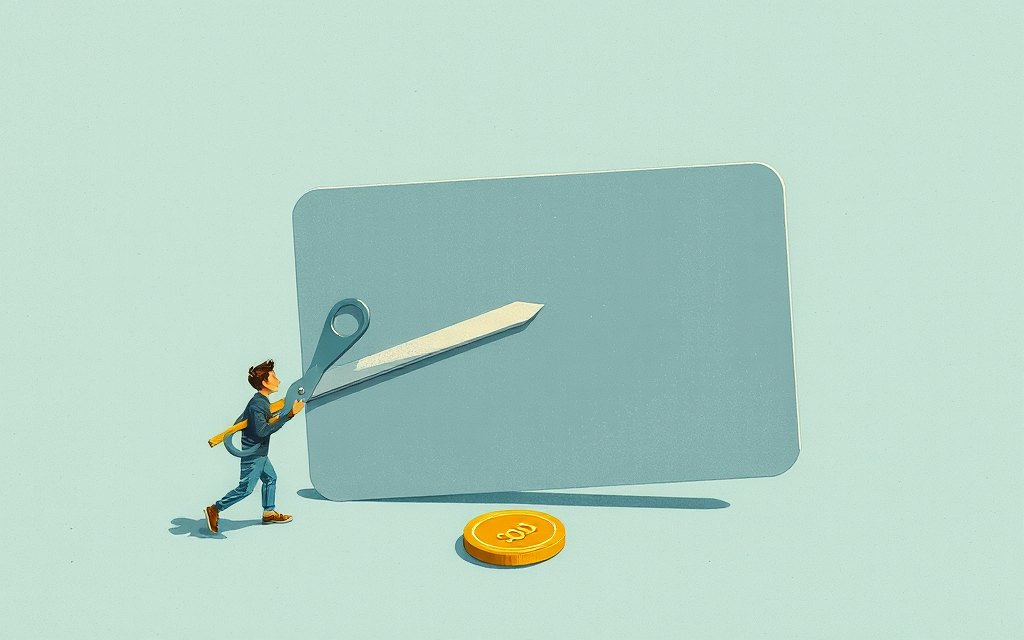
You can’t empty a bath with the tap running. While you’re paying a card down, stop using it for new spending. Take it out of your wallet, remove it from your phone and from the shops where it’s saved. Use your debit card or cash for daily spending.
This is the hardest step and the one that makes all the others work.
Step 2: List every card
Write down, for each card: balance, interest rate (APR), minimum payment. Three columns, five minutes. Most people have never seen their debts on one page, and it is usually less frightening than the vague number in their head.
Step 3: Pick your order
Pay the minimum on every card, always. Then send every extra dollar to one card at a time. There are two ways to choose which:
- Avalanche: highest interest rate first. Costs the least in total.
- Snowball: smallest balance first. You clear a whole card sooner, which keeps many people going.
The difference in dollars is often smaller than people expect, and the method you stick with beats the perfect one you abandon. The Debt Payoff Calculator runs both on your debts and shows the gap.
When a card is cleared, take everything you were paying on it and add it to the next one. Your total monthly payment never goes down until the last card is gone.
Step 4: Find the extra money
The table above shows why an extra $100 or $150 a month matters so much. Where it comes from:
- A temporary squeeze. Not forever. Pick two or three categories (eating out, subscriptions, online shopping) and cut them hard for the months it takes.
- Sell things. A one-off $400 from the garage is a $400 payment that saves interest every month afterwards.
- Extra income, directed. Overtime, a weekend job, freelance work. Decide before you earn it that it goes to the card.
- Windfalls. Tax refund, bonus, gifts.
Step 5: Lower the rate if you can
Two common options. Both help only if the spending has already stopped:
- Ask for a lower rate. Call the card company and ask. It costs ten minutes and sometimes works, especially with a good payment history.
- A balance transfer card or a consolidation loan. These can replace a high rate with a low or zero one for a period. Check the transfer fee, what the rate becomes after the promotional period, and whether you can realistically clear it in that time. Moving debt and then running the old card back up is the trap that leaves people with twice the problem.
Step 6: Keep a small buffer
It sounds wrong to keep savings while paying 22% interest. But with nothing set aside, the next car repair goes back on the card and wipes out a month of progress. A buffer of around $500 protects the plan. More on that in How to Build an Emergency Fund From $0.
If it’s more than you can manage
If the minimums alone are more than you can pay, or you’re using one card to pay another, talk to a non-profit credit counselling service. They can review your whole situation and may be able to set up a payment plan with lower rates. Be careful with companies that promise to “settle” or erase your debt for a fee.
Your move this week
- Take the card out of your wallet and your phone.
- Write the three-column list.
- Run your numbers in the Credit Card Payoff Calculator and find one amount you can add each month.
Debt feels permanent mostly because minimum payments are designed to make it slow. Change the payment, and you change the date.
Sources and further reading
- Credit cards, Consumer Financial Protection Bureau
- Credit reports and scores, Consumer Financial Protection Bureau
Questions people ask
What is the fastest way to pay off credit card debt?
Stop new spending on the card, pay more than the minimum every month, and direct every extra dollar at one card at a time. Lowering the interest rate, where possible, speeds it up further.
Is it better to pay off the highest interest card or the smallest balance first?
Highest interest first (the avalanche method) costs the least overall. Smallest balance first (the snowball method) gives a quicker first win. The gap in dollars is often small, so choose the one you will keep doing.
How long does it take to pay off $5,000 of credit card debt?
At 22% interest, paying $125 a month takes about six years. Paying $250 a month takes about two years, and $400 a month about 15 months.
Educational content, not financial advice.