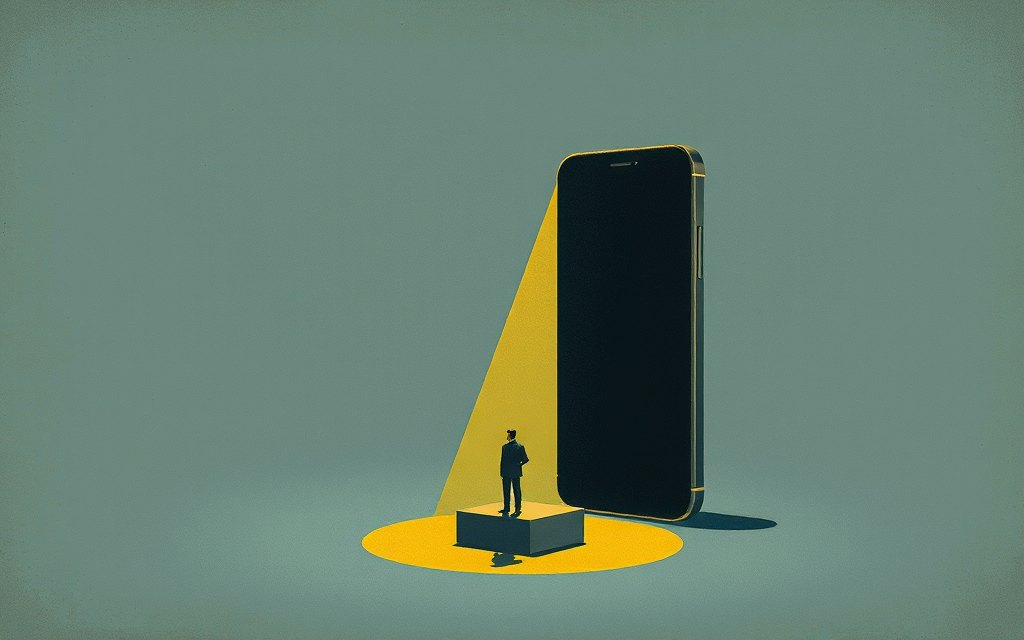
You checked your phone four times before you even finished your morning coffee today. You probably do not remember what you looked at, but someone, somewhere, made a fraction of a cent off your wandering eyes. Your focus is bleeding away, and it is not an accident. It is a highly optimized business model.
If you feel like you never have enough time, but you still spend two hours a day scrolling through feeds, something is deeply wrong with how you use your hours. You are participating in an invisible, high-stakes market where your most valuable asset—your attention—is traded to the highest bidder.
We often talk about how to manage our money, but we rarely discuss how to manage our focus. Yet, the two are entirely connected. How you spend your attention dictates how you spend your money, shape your career, and build your life. Let us pull back the curtain on how this market actually works.
The Invisible Auction Block
Attention is not just an abstract concept; it is a commodity. Every time you open an app, read an article, or watch a video, an automated auction takes place in milliseconds.
Here is how it works: Advertisers want to sell you something. Platforms like social media networks and search engines have one thing advertisers need—your eyeballs. When you load a page, the platform instantly profiles you based on your age, location, income bracket, and past behavior. They then auction off the space on your screen to advertisers in real time.
You are not buying a service when you log onto these platforms. You are the inventory. Your attention is sliced into seconds and sold to brands competing to change your behavior. It is a brilliant, highly lucrative system that turns human curiosity into predictable revenue.
The Illusion of the Free App
Why do we gladly hand over hours of our day to these systems? Because we do not realize we are the product.
When you pay for a cup of coffee, the transaction is clear. You hand over five dollars, and you get a drink. But when you download a “free” app, the transaction is hidden. You are paying with your data, your habits, and your time.
Platforms mask this transaction by offering genuine utility or entertainment. They connect you with old friends, make you laugh, or help you find a recipe. Because no money leaves your bank account in that exact moment, your brain registers the exchange as harmless. You feel like a consumer enjoying a free service. In reality, you are an unpaid data miner, digging up your own behavioral patterns to enrich a tech company.
Real-World Slot Machines
To keep the auction running, platforms must keep you hooked. They employ teams of behavioral psychologists to build digital slot machines right into your pocket.
Look at the mechanics of a modern social media feed. The infinite scroll removes any natural stopping cue. You never reach the bottom of the page, so your brain never gets the signal that it is time to move on to something else.
Consider the “pull-to-refresh” feature. It mimics pulling the lever on a casino slot machine. You drag your thumb down, wait a split second for the loading icon, and get a randomized reward—a new photo, a breaking news alert, or a message. Sometimes you get nothing interesting, which makes the times you do get something interesting feel even more rewarding. This variable reward schedule is a proven psychological trick to build addiction.
Even algorithms are designed to prioritize outrage and strong emotion because data shows that angry or highly emotional people stay online longer and click more ads. Your peace of mind is terrible for their profit margins.
The Hidden Cost to Your Wallet and Mind
The consequences of this constant attention harvesting extend far beyond wasted time. When your focus is compromised, your financial and personal well-being take a massive hit.
First, consider your decision-making. When your brain is constantly bombarded with micro-stimuli, you suffer from decision fatigue. A tired, overstimulated brain defaults to the path of least resistance. This leads to impulse buying, poor dietary choices, and emotional investing. You are much more likely to click “Buy Now” on an item you do not need when your mental defenses are worn down by a customized algorithm.
Second, your earning potential drops. Wealth and career growth in the modern economy require deep work—the ability to focus without distraction on a cognitively demanding task. If your brain is trained to seek a dopamine hit every five minutes, you cannot perform deep work. Your attention span shortens, your productivity stalls, and you lose your competitive edge.
Finally, the continuous exposure to curated lifestyles and targeted ads warps your financial reality. You are subtly pushed into lifestyle inflation, constantly comparing your behind-the-scenes life to everyone else’s highlight reel. The platforms do not just want your attention; they want your money to flow toward their advertisers.
How to Protect Your Most Valuable Asset
Smart money requires a smart mind. If you want to protect your wealth, you must first protect your attention. Here is how thoughtful professionals and investors defend their focus.
Treat Attention Like Capital
Do not view your time as infinite. Treat your daily focus like a fixed daily budget. Every time you open an app, ask yourself: “Is the return on this investment worth the cost of my attention?” Usually, it is not.
Break the Algorithmic Loop
Take back control of your inputs. Turn off non-essential notifications. Your phone should only vibrate for real people who need you, not for a brand running a flash sale. By turning off the constant pings, you stop the platform from dictating your schedule.
Build Friction
Platforms reduce friction to keep you scrolling. You must add friction back in. Move distracting apps off your home screen or delete them from your phone entirely, forcing yourself to use a web browser. The extra steps give your brain a moment to pause and ask, “Do I really want to do this right now?”
Invest in Deep Work
Schedule uninterrupted blocks of time for focused work and strictly defend them. Put your devices in another room. By training your brain to focus deeply for extended periods, you rebuild the mental muscles that the attention economy has eroded. This makes you more effective, more analytical, and less prone to reactive decisions.
The Bottom Line
Attention is a chess game between your immediate impulses and your long-term goals. The platforms are playing to win, and they have billions of dollars in technology backing their moves. You win by thinking, not reacting.
🧠 Smart Money Talk Takeaway: Your attention is the currency that buys your future. If you let platforms spend it for you, they will build their wealth while draining yours. Reclaim your focus, and you reclaim your freedom.